The Wave House
-
Our Role
Design and Build
-
Year
2022
-
Location
Boise, ID
Details
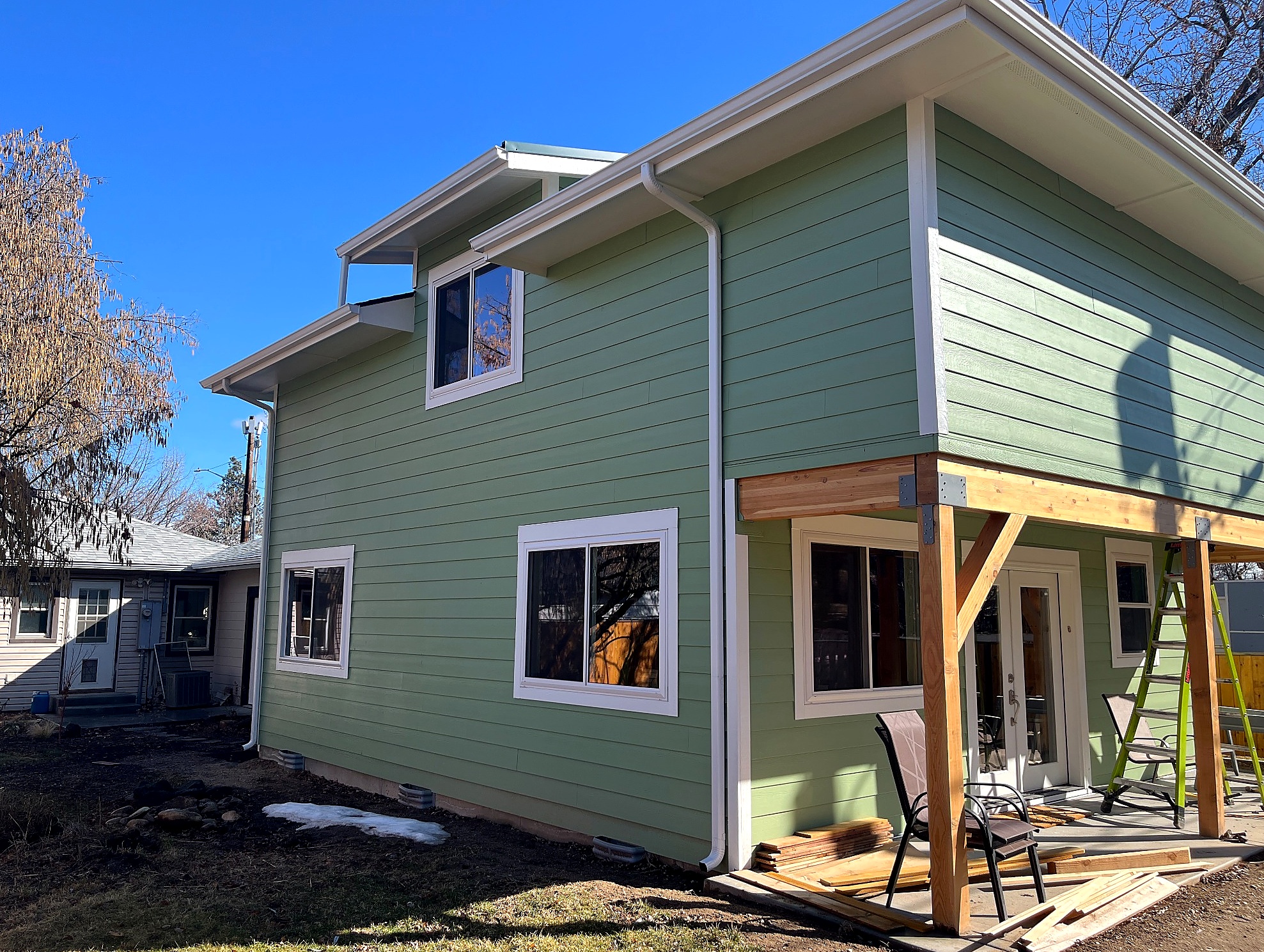
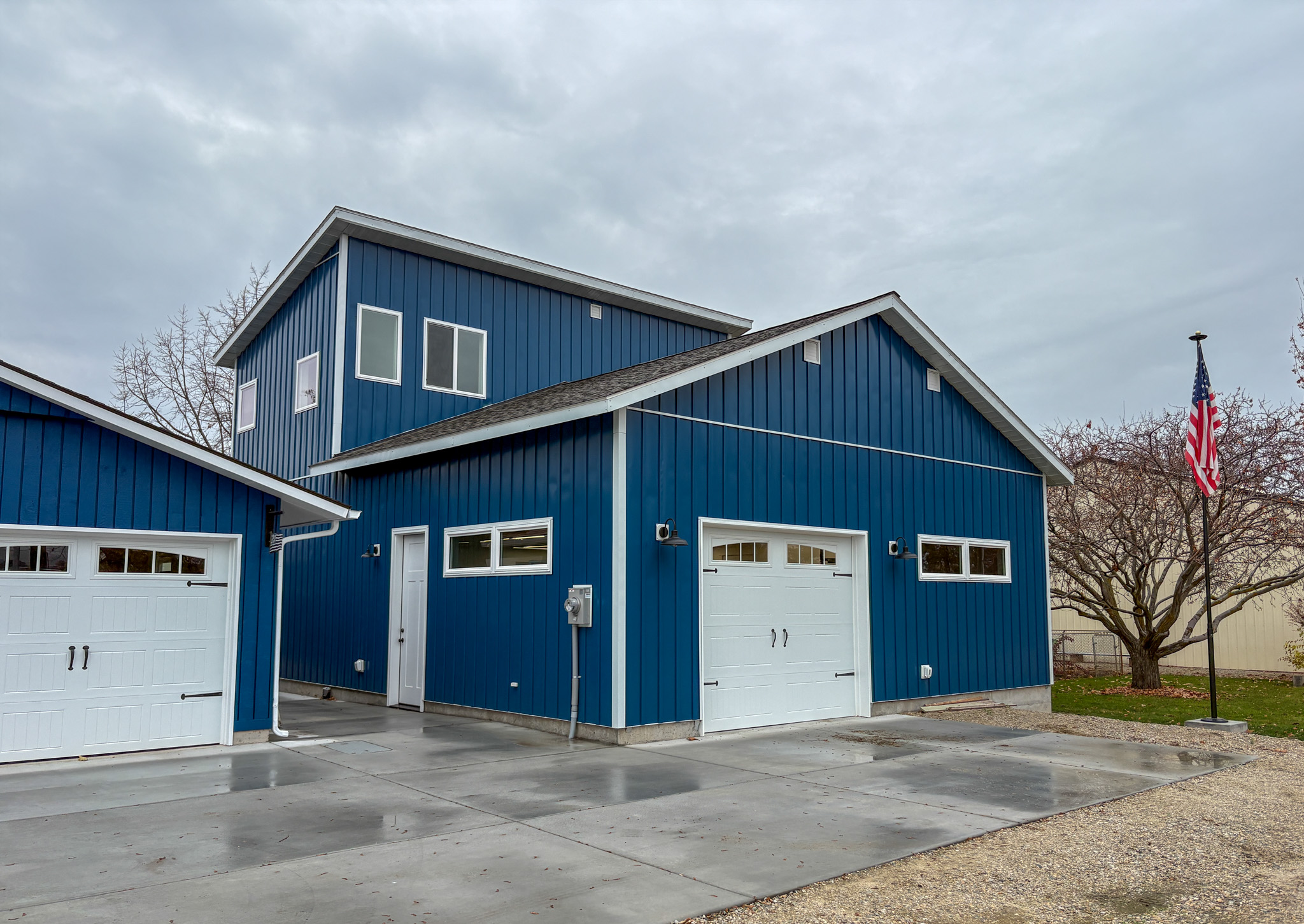
The clients contacted us about building an ADU. Their original idea was to convert the existing detached garage into an ADU. The existing detached garage was only 350 sq ft and to fit all the living area the clients wanted into the ADU we would need to add an addition onto the existing garage. At this time in 2022 the Boise ADU code limited the sq ft on an ADU to 600 sq ft or 10% of the lot size. The lot size of this property was 6,098 sq ft so we qualified for 600 sq ft. under both conditions.
However, there were issues with using the existing detached garage. First, the detached garage was built on the property line to the rear and to the side. Boise planning department required that we must comply with setbacks if we were going to add additional square footage. The side setback was 5’ but the rear setback was 15’. This meant that we would have to move the existing structure to add on. Second, the detached garage was built on a simple slab with thickened edge footings. To meet building code, we would need to install a proper foundation under the existing building. The footings would need to meet frost depth at 2’ below grade.
After reviewing these issues with the clients, we came to an agreement that the existing detached garage would need to be removed so that we could build the new ADU to maximum allowed size, comply with setbacks and install a proper foundation. DSC contacted a reseller of construction materials and made a deal to donate the existing siding and much of the wall framing lumber so that the reseller could put it to use again.
During the demo of the existing structure DSC noticed that the rafters for the roof system we a rough sawn old growth fir and they were in great condition. DSC suggested using this lumber for the finish trim inside the new ADU. DSC milled down several of the timbers on site during the trim stage and installed the new millwork in several strategic areas.
Project Brief
-
Location
Boise, ID
-
scope
New ADU 1 bed, 1 bath, kitchen, living and laundry
-
timeline
1 month design, 5 month build.
-
client goal
New ADU for Short Term Rental
The Challenge
Although there were several challenges involved in getting this ADU approved and permitted there were other challenges along the way. The challenges that I will highlight here have to do with utility connections.
First, the existing power to the primary residence was an overhead power drop. This was done by suspending a power line in the air from the transformer on the power pole to the weather head on the primary residence. The issue with this is that the power line passed wight over the footprint of the ADU and it did so at an elevation that was lower than the new roof system for the ADU would be.
The second issue was the tie in for the sewer system. Years prior, a previous owner had the City of Boise install a second sewer tap to this lot so that he could empty his RV into the sewer system. Boise Public Works had given us the location of that sewer tap that had since been abandoned so that we could use that to connect the new ADU to the public sewer system. After many hours digging and searching for the sewer tap where Public works had located it and all around the area, we could not find it anywhere.
Our Solution
The first issue we addressed was the overhead power line. The clients were planning to use the new ADU as a short-term rental so they wanted to have it on a separate electrical meter so the business they started to operate the ADU could pay that bill separate from their primary residence bill. At this time in mid-2022 covid had hit the electrical supply market very hard and many parts were not available. Luckily, we were able to locate one of the only remaining dual meter base 400-amp panels. With this panel we were able to meet with Idaho Power and request the 400-amp overhead drop land at the new ADU and then we would sub-feed the primary residence with an underground line off the second meter. This eliminated the need for the existing overhead line that was interfering with the roof system.
After determining that we could not find the sewer tap we looked for alternative solutions. We determined that the existing house only had two existing bathrooms. The ADU would only have one bathroom. We dug up and exposed the existing sewer line from the house and confirmed that it was a 4” line. This would allow us to tie into that sewer line instead of the proposed tap and connect to sewer on this primary line. This method was approved by Public Works, and the plan was executed in this way.
Project Images


Customer Review
Corey Majors
Similar Projects